I want to learn...
Author:

Barney Meekin
A CEFR language test is a valuable way to demonstrate your language ability, and this article will explain how to prepare for CEFR test with study tips and practice strategies.
By understanding the CEFR and following the seven tips in this article, you set yourself up for success on your next language test.
Benefits of using Busuu for CEFR Test Preparation

Self-study your way up the CEFR levels
Busuu courses align with the CEFR levels, from A1 (beginner) up to C1 (advanced) for some languages. So you can go from beginner to advanced through self study on your mobile device. It’s the perfect way to get ready for any test aligned to the CEFR, no matter what the language or level.
Academic exam prep courses for English & Spanish
When you’re ready to knuckle down and get ready for test day, check out Busuu Premium’s exam preparation courses and academic courses. Sign up and get access to high-level English and Spanish test practice. These courses will teach you how to improve on any language test.
High-level reading and listening practice
Language tests are notorious for tricky reading and listening sections. Well, with Busuu Premium you get access to high-level resources to help you get ready. English learners can access articles from The Economist and video lessons from The New York Times. And Spanish learners get access to articles and videos from El Pais.What is the CEFR, and why is it important?
The Common European Framework of Languages (CEFR) is a set of guidelines and criteria used to assess the proficiency level of language learners. There are six levels in the CEFR (from beginner to advanced): A1, A2, B1, B2, C1, C2.
The guidelines are made up of ‘can-do’ statements focusing on communication skills. Using these ‘can-do’ statements, you can self-assess your language skills.
But to get a more accurate picture of your ability, you can take one of the many CEFR-based language tests (more on these later). When preparing for these tests, having a clear idea of how the CEFR works is useful.
The CEFR and proficiency tests
Many language tests around the world align their scores with the CEFR. Some tests use the CEFR levels as test results or are designed based on CEFR levels. Let’s take a look at some of the most common CEFR-aligned language tests.
English language tests:
TOEFL (Test of English as a Foreign Language) results are mapped to the CEFR.
IELTS (International English Language Testing System) results align with the CEFR.
Cambridge English Qualifications (for example, FCE, CAE, CPE) are based on the CEFR.
PTE (Pearson Test of English) results align with the CEFR.
French language tests:
DELF (Diplôme d’Études en Langue Française) diplomas are based on the CEFR.
DALF (Diplôme Approfondi de Langue Française) diplomas are based on the CEFR.
TCF (Test de Connaissance du Français) results are mapped to the CEFR.
Spanish language tests:
DELE (Diploma de Español como Lengua Extranjera) diplomas are based on the CEFR.
SIELE (Servicio Internacional de Evaluación de la Lengua Española) results are mapped to the CEFR.
Other language tests:
German: Goethe-Institut exams are based on the CEFR.
Italian: CILS (Certificazione di Italiano come Lingua Straniera) exams are based on the CEFR.
Portuguese: CAPLE (Centro de Avaliação de Português Língua Estrangeira) exams are based on the CEFR.
Russian: TORFL (Test of Russian as a Foreign Language) results align with the CEFR.
Bonus tip: If you don’t want to take a traditional language test, check out Busuu Premium. When you complete a level of one of the courses listed below, you can take an End of Level test. Pass that, and you’ll get a CEFR-aligned certificate to show off. All without the stresses involved with traditional language tests.
Currently, you can get Busuu certificates for the following courses:
Chinese A1
Dutch A1 to B2
Dutch for Business B1
English A1 to C1
English for Business C1
French A1 to B2
French for Business B1
German A1 to B2
Italian A1 to B2
Japanese A1 to B1
Korean A1 to A2
Portuguese A1 to B2
Russian A1
Spanish A1 to C1
7 tips for acing a CEFR language test
1) Be consistent
At the top of the list, we have the most important factor for language learning – consistency. Whether you’re taking a test or not, consistent study is the most effective way to achieve your goals. It’s not glamorous. But turning up day after day or week after week for months and months leads to success.
Unfortunately, there’s no shortcut to language success, and passing tests is no different. It takes a lot of intentional study and practice. We recommend you create a study plan when preparing for a CEFR test. It doesn’t need to be super detailed. But set aside time in your schedule to study as often as possible.
2) Set realistic goals
Being unrealistic can negatively affect your motivation to study. Let’s say you create an ambitious study plan. You set aside three hours every day for test prep in your study plan. You decide you’ll study from 7pm to 10pm on weekdays and from 9am to 12pm on weekends.
But then your friend from work invites you out for dinner. Or your partner wants to take a weekend trip. Or you feel tired, so decide to sleep late on Saturday. In other words, life gets in the way of your ambitious plan.
When you notice you’re not hitting your targets, it’s easy to be angry with yourself or to feel guilty. This makes the idea of studying even less appealing because you now associate it with those feelings of anger and guilt. So you study even less. You feel bad again. And you get stuck in a cycle.
Being more realistic with your goals keeps you away from this vicious cycle. Don’t say, “I’ll study three hours every day.” Instead say, “I’ll study at least 10 hours per week.” That way, you can fit the study around your responsibilities or social life. And you include flexibility from the get-go.
Being too unrealistic about your target results can also put you in a similar vicious cycle. When setting your goals, make sure they’re achievable. Don’t aim for perfect scores. Don’t try to skip several levels because it could easily lead to disappointment.
3) Look at the CEFR criteria
One of the best things about the CEFR is the easy-to-understand ‘can-do’ statement criteria. When you’ve set your realistic target, check the CEFR to see what you need to be able to do.
Let’s say your goal is to achieve a B1 score on one of the Cambridge English Exams. Because these tests are designed on the CEFR, you can be confident the levels closely match the ‘can-do’ statements.
So for example, you might look at the criteria and see that to achieve B1 in listening, you need to “understand the main points of clear standard speech on familiar matters regularly encountered in work, school, leisure, etc.”
For speaking, B1 means you “can deal with most situations likely to arise whilst traveling in an area where the language is spoken. [And you] can enter unprepared into conversation on topics that are familiar, of personal interest or [relevant] to everyday life (e.g. family, hobbies, work, travel and current events).”
Checking the CEFR guidelines gives you a clear target you need to reach by test day.
4) Understand the test format
Each CEFR language test has its own format, likely including unique question types. Spend time looking at all the different question types on your test. Double-check how long you have for each section or question. Then you can start prioritizing questions. Start with difficult, time-consuming questions first. Finish up the questions you’re comfortable with later on.
Every single language test has a detailed breakdown of its test format. Check the test’s homepage.
5) Practice all four skills
Language proficiency tests usually (but not always – another reason you need to check the test format) assess all four language skills. These are speaking, reading, writing and listening. So you need to practice them all.
Prioritize your weakest areas when preparing for the test. This doesn’t mean you should neglect the skills you're comfortable with. They need attention, too. But not as much as the skills you struggle with.
Understanding the test format, which skills the test covers, and your strengths and weaknesses allows you to prepare properly for your language test.
6) Study previous tests
Most language tests share (or sell) previous tests you can use for practice. So, do them. Do lots of them. And do some more. Time yourself. Replicate test conditions. There’s no better way to prepare for a test than by doing this kind of specific and intentional practice.
I’m going to be honest with you. Studying for a test is boring. And often, it’s only useful until you take the test and useless afterwards. But if you need a language certification, forget that and get your reps in. Practice past tests. Reflect on what goes well and what is hard. Then change your study plan to address any problems you find.
7) Spread your learning out
We’ve all been there (well, most of us non-perfect students have). It’s the night before a big test, and you’ve done nothing. But you’re not worried because you don’t have any plans this evening. You can stay up until 3am to cram.
Don’t do this. Seriously, don’t. Spread your learning out. If you know you have a test, start preparing immediately. Don’t wait. Don’t cause yourself unnecessary stress and anxiety. Follow the other tips on the list to make a solid study plan to help you ace the test.
Why Busuu is the best place to prepare for a CEFR test
Get feedback from the Busuu Community
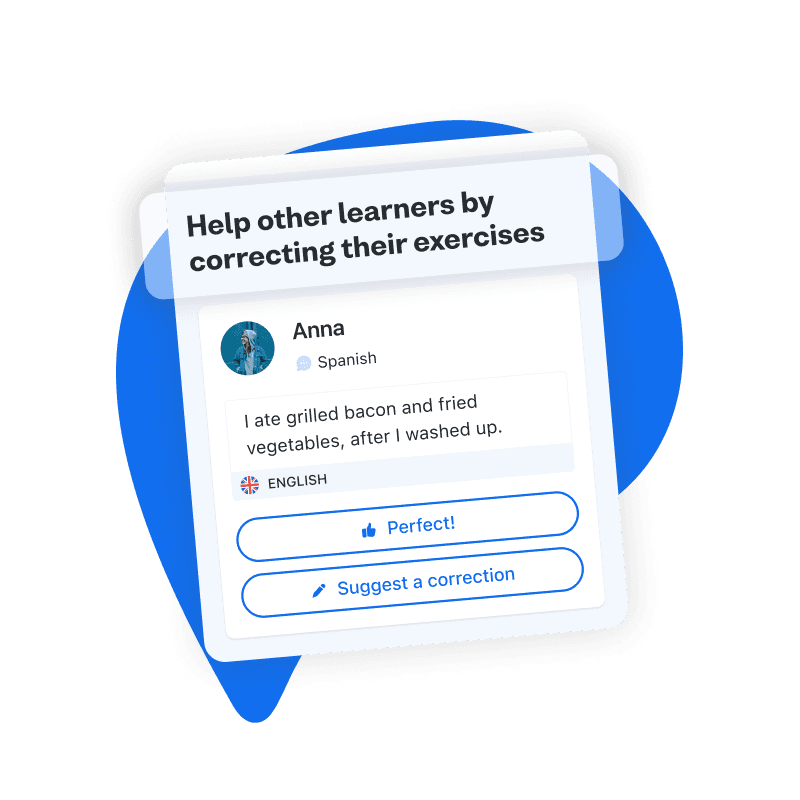
Writing and speaking are a huge part of many language tests. Instead of going it alone, join Busuu’s online community of millions of language learners. Share your writing and speaking, and you’ll get personalized feedback telling you what’s good and what you need to work on before test day.
Easy-to-complete lessons
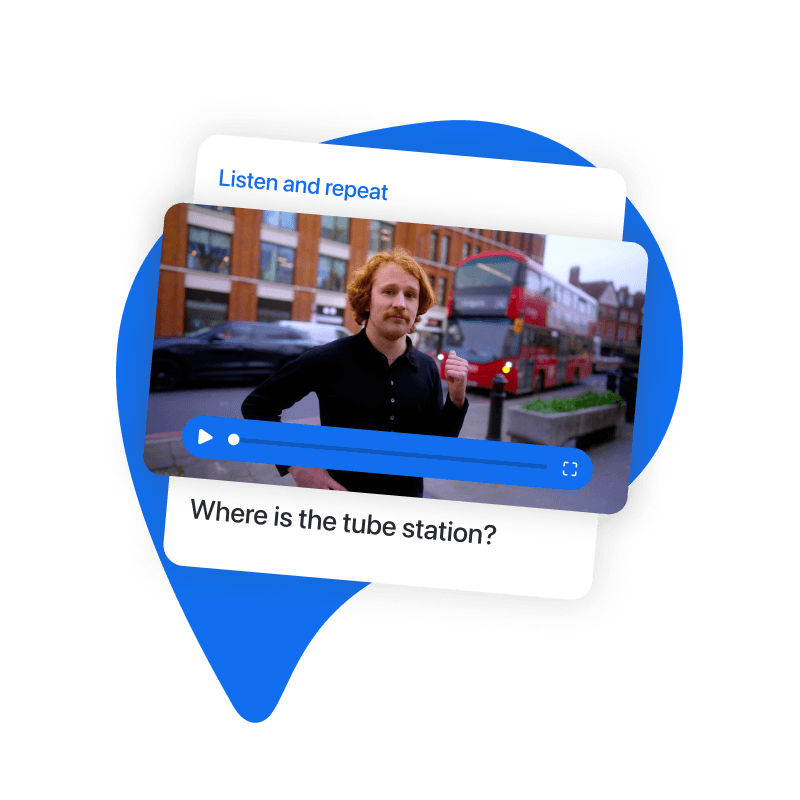
You can squeeze Busuu lessons into your day no matter how busy you are. Access easy-to-follow lessons with short videos on your mobile device. You can prepare for a language test whether you have 5 or 50 free minutes to study.
Expert-designed listening and reading courses
Want to take your skills to the next level? You need access to high-level, authentic listening and reading materials. Luckily for you Busuu has teamed up with newspapers from around the world to give you just that. Access reading, listening and video activities from The Economist, The New York Times, and El Pais.

Ace your CEFR-based language test
Follow the seven tips in this article to prepare for your CEFR language test. But remember, it’s just a test. It’s important and stressful, but if you don’t get the result you want, you can try again.
Make a study plan, prepare for the specific test you’re taking, and whatever you do, don’t cram. Do this, and you’ll be setting yourself up for success.
Master a new language with Busuu
Busuu offers expert-designed courses in 14 of the world’s most widely-used languages. Whether you want to learn a new language or work on a language you already know, you can improve your skills using our bite-sized, interactive lessons, with personalized feedback from the Busuu Community.
AUTHOR
Barney Meekin
Newlanguages