I want to learn...
Author:

Barney Meekin
Want to learn basic French vocabulary for beginners? Well, this is a great place to start. When you’re a beginner, you should focus on learning the most common French words. Sure, grammar’s important too. But early on in your French journey, learning vocabulary will give you the best bang for your buck.
In this article, you’ll learn the most effective ways of improving your French vocabulary so you know your je m’appelle from your je suis. And you’ll find out why Busuu is the best app to help you smash your French goals.
The benefits of building your French vocabulary
Communicate better
You learn French to communicate with other French speakers. It’s as simple as that. The more basic French words you know, the better you can express yourself. The better people will understand you. And the better you’ll understand complex conversations and texts. Busuu’s Complete French course teaches you everything from beginning to advanced vocabulary. You’ll never be lost for words again.
Be confident and comfortable
Ever seen a fellow language learner chatting away without worrying about making mistakes? Communicating well, no matter how low their skills are? What you’re seeing there is confidence. They’re comfortable chatting. To be comfortable and confident, you need to increase your French vocabulary. Stop worrying about mistakes. Forget checking your dictionary endlessly. Get out there and communicate!
Achieve all your French goals
Busuu Premium gives you access to a range of French courses for every goal. Complete French takes you from the beginning to advanced level. French for Travel gives you the basics for your next trip. French for Business gets you ready to join a French-speaking workplace. French Pronunciation helps you speak with confidence. Inclusive French guides you through using French in a modern, diverse society.7 top tips for mastering French vocabulary
Now you know why you should improve your French vocabulary. Let’s move on to the how. Here are seven top tips to help you memorize French vocabulary.
1) Focus on the most frequent words
There are an estimated 60,000 to 100,000 words in French. Luckily for you, you don’t need to learn most of them. Because you’ll be able to understand around 85% of all French conversations when you know the most common 3000 words. Of course, this is just an estimate. But it gives you a good goal to strive for.
Knowing 2000 to 3000 French words will make you an advanced French speaker. But what if you’re just starting? First, focus on the 100 most frequent words. When you’ve learned them, master the 500 most frequent words. Then the 1000 most frequent words. And so on.
“But how do I know what the most frequent words are?” I hear you say. A quick internet search for a basic French vocabulary list will give you all the information you need. There’s no need to rush your way to the 3000-word point. Start with the simple words. Master them. Then move on to the next stage. It’ll take time, but you’ll get to a point where you can understand most of the French you see and hear.
To give you a headstart in finding the most useful words, join Busuu’s Complete French course to learn vocabulary for each level, from beginner to advanced.
2) Context matters
Think about how word meaning changes in your first language depending on the context. It’s the same for French. To really understand a word, you need to learn it in context. That means hearing it in natural French communication or reading it in a French text.
Learning words in context will teach you things you might not find in a dictionary. Speak with French people from different regions, and you’ll hear different accents and usages, for example.
To learn vocabulary, you need a lot of practice. That means lots of time practicing conversations and lots of time reading and listening to French. I can’t stress how important ‘lots’ is here. You don’t learn vocabulary overnight. You need to encounter words multiple times before you can memorize them.
Top tip: Mix it up a little. Sometimes try easy listening and reading activities for fun, focusing on the meaning. Other times, do difficult activities, focusing on the language instead of the meaning. The easy tasks will help you learn French vocabulary naturally (if you do enough of them).
3) Don’t reach for the dictionary straight away
What’s your first instinct when you come across a new word? Most of us want to get our dictionaries out to figure out what it means. But don’t. Not right away, at least.
First, look at the word in context, thinking about the words on either side of it and the sentences before and after it. There will be clues to its meaning in the context. So try to figure out what it means on your own. Write the word down in your notepad and continue the activity. If possible, don’t interrupt the flow of your reading, listening and speaking activities to look up words.
When you’ve finished the activity, go through your notebook. Check the meaning of the words you wrote down to see if your guess was correct.
This might sound like a strange way to learn vocabulary, but it works because your mind is more engaged. It’s not a passive activity like looking in the dictionary. You’re actively trying to decipher the meaning of the new words you encounter.
4) Leave space between reviews
Spaced repetition is a proven, effective way to memorize vocabulary. You need to see or hear a word multiple times to memorize it. But the brain naturally forgets words over time. Spaced repetition gives you multiple encounters with a word at increasing intervals to stop you from forgetting.
Here’s a simple example of spaced repetition:
| Day 1 | Learn a new word. |
|---|---|
| Day 2 | Review the word. |
| Day 7 | Review the word again. |
| Day 16 | Review the word again. |
| Day 32 | Review the word again. |
| Day 33+ | And so on. |
One way you can do spaced repetition is with boxes. Line up four or five boxes on a table or shelf. Put new words in the box on the left. This is your daily review box. Choose time frames for the other boxes – once a week, once every two weeks, once a month, and so on. Review the words in the first box every day. If you remember the word, move it one box to the right. Keep it in the daily review box if you don't remember it. Every time you get a word right in a review, move it one box to the right.
By doing this, you’ll spend more time learning the words you don’t remember yet. And you’ll review the words you do remember at increasing intervals.
This is an effective way of doing spaced repetition, but it takes some organization. To make things easier, you can use an app or computer program. They save your words, remind you to review them, and automatically track which you get right or wrong.
For example, Busuu’s Vocabulary Review tool automatically tracks all the words you’ve learned in your French courses. Its spaced-repetition algorithm tracks your performance. Automatically, words you remember get put on an increasing interval review schedule. And words you struggle with appear more frequently for review.
5) Make your own flashcards
People have been using flashcards to learn languages for a long time for a reason. They aren’t glamorous, but they work. Here’s how you can use them to memorize French vocabulary.
Write new French words on the front of the cards. Write the meaning, pronunciation, and even an example sentence on the back. When you want to review the words, look at the front and try to remember the meaning. Check your answers on the back. Simple.
A word of warning – don’t buy premade sets of flashcards. Flashcards are a fantastic way of personalizing your learning. Make flashcards with the words you need. You can do it the old-fashioned way on cards. Or you can use one of the many flashcard apps for your mobile device.
For example, Busuu’s Vocabulary Tool automatically tracks and reviews the words you’ve studied in your French courses, so you don’t need to spend time making flashcards.
6) Use a mobile app
Let’s not underestimate how important convenience and accessibility are when learning French. With an app like Busuu, you have access to French resources 24/7, wherever you are. On the train to work? No worries, you can squeeze in a five-minute lesson. Rocking your baby to sleep? All good. Use your other hand to practice French vocabulary.
Convenience and accessibility are important because they allow you to build a habit. Consistency is arguably the biggest factor influencing your success with French.
7) Use your new French words in the wild
You’ve done the hard work. You’ve learned a ton of French words. Now’s the time to get out there, meet new people, and use them in real-life communication. This is the fun bit.
Whether you speak or write, the important thing is communicating. Because the more you use your new words, the more comfortable you become with them. You reinforce your knowledge. You gain a deeper understanding of French. And you have fun chatting with interesting people. Win-win.
Why Busuu is the best place to learn French vocabulary
A community of language learners just like you
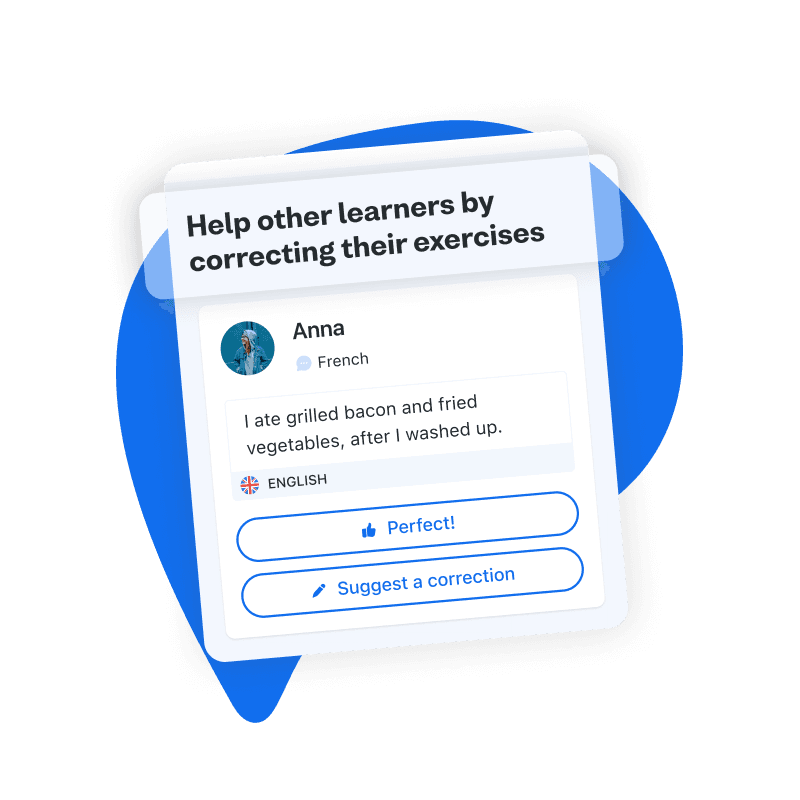
There are millions of language learners and native speakers in the Busuu Community. They practice their language skills, give feedback on other people’s language practice, and support language learners from all over the world.
Features that make it easy to be consistent
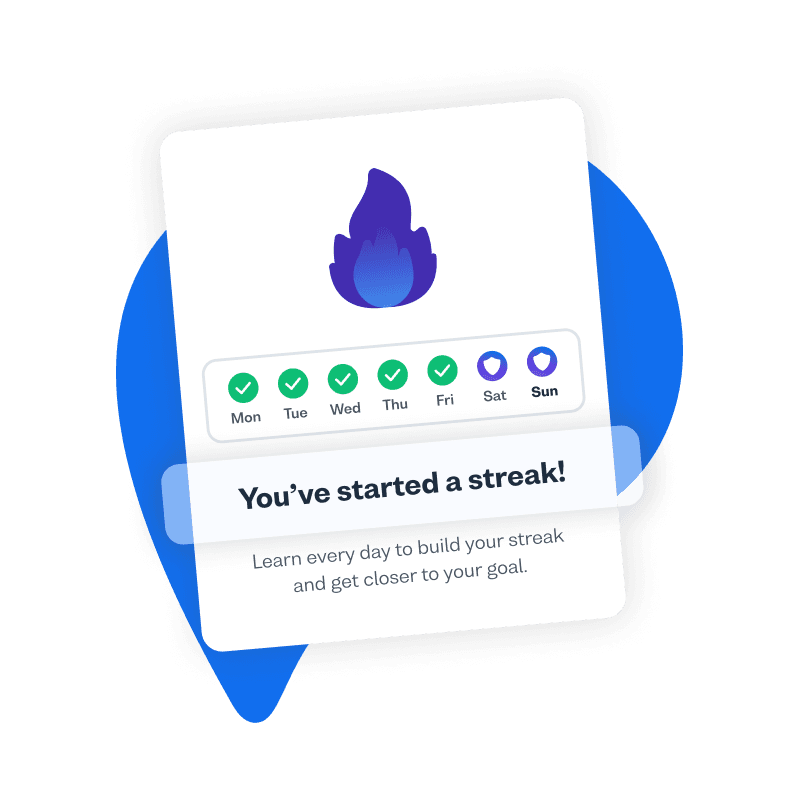
Busuu’s easy-to-follow, bite-sized lessons mean learning French is accessible and flexible. You can squeeze it into your day and take it on the go with our handy mobile app. You get all the tools you need to make a consistent habit.
Advanced language learning tools
Learn French vocabulary with Busuu’s spaced-repetition algorithm. Busuu automatically tracks the words you’ve learned and your progress. Busuu uses this data to give you personalized language learning. No more wasting time – study the words you need to study at the perfect time to aid memorization.
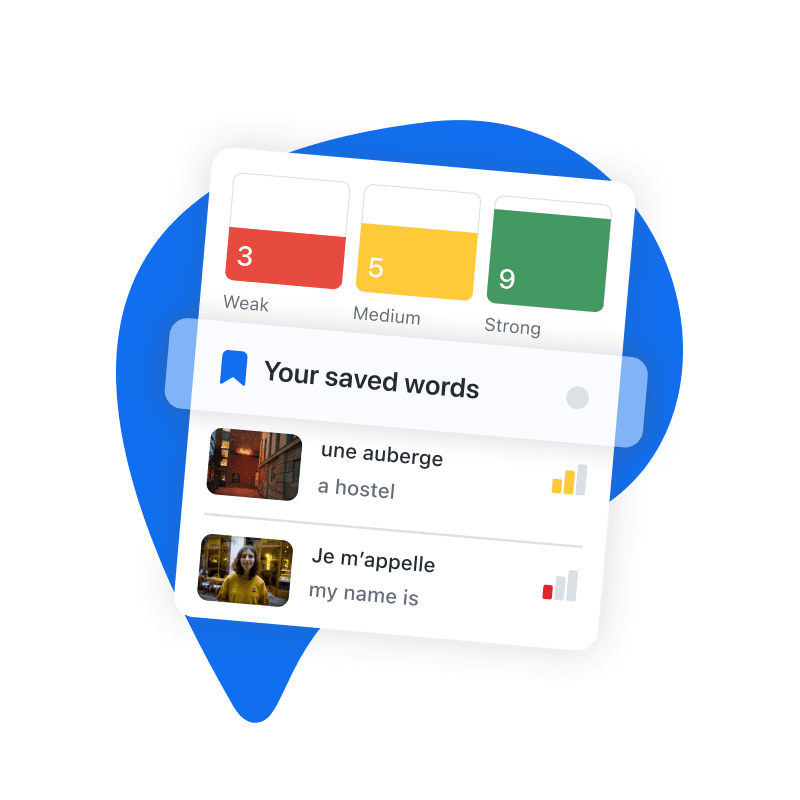
French vocabulary learning resources on Busuu
Busuu’s the perfect app for mastering French vocabulary. No matter what your goals are. Get well-rounded French for daily life in the Complete French course. Prepare for your trip to France in the French for Travel course. And smash your professional goals with the French for Business course.
Learn with Busuu Premium and you get access to French vocabulary learning resources from beginner (A1) to advanced (B2). Best of all, they all come in easy-to-follow lessons and videos you can do wherever and whenever you want to. The accessibility doesn’t end there though. In the Busuu community you get feedback and support from millions of language learners. All from your mobile device.
Learn French vocabulary today with Busuu
When you’re ready to smash your French language goals, check out Busuu. Access a range of French courses for every goal. Complete bite-sized and easy-to-squeeze-in lessons. And join a thriving online community. You will achieve your French goals with Busuu.
Want to learn more French vocabulary for work, school or travel?
Continue learning more French vocabulary for your daily life, via Busuu’s Complete French course, French for Business course or French for Travel course. Learn with the support of millions of learners and native speakers in the Busuu Community.
AUTHOR
Barney Meekin
Newlanguages