I want to learn...
Author:

Barney Meekin
There are 93,000 standard Spanish words (according to the Royal Spanish Academy). That’s a lot of words! You don’t need to memorize all of them but it shows you how challenging learning Spanish is.
It’s not a challenge you need to do alone, though. We’re here to help you memorize Spanish vocabulary. In this article, you’ll learn 10 top tips to help you learn Spanish vocabulary. And you’ll find out why Busuu is the best app for learning Spanish.
The benefits of building your Spanish vocabulary
Better communication
Knowing more Spanish words means you can express yourself more clearly. You’ll have the right words for the right situations. And you’ll be able to understand more complex conversations. Busuu’s Complete Spanish and Complete Latin American Spanish courses will teach the vocabulary you need to go from beginner to advanced.
Higher confidence
Speaking in Spanish as a language learner is nerve-wracking. You’re worried about making mistakes. Afraid people are judging your skills. Two things can help: Understand that no one judges you, and increase your vocabulary. Learn Spanish vocabulary with Busuu and gain confidence in communicating in Spanish.
Faster progress to your goals
Want Spanish for a trip to Spain or Latin America? Busuu’s Spanish for Travel course teaches you everything you need. Need Spanish certificates for work or study? Busuu’s Advanced Spanish Exam Preparation course gets you ready for important tests. Whatever your goals are, increasing vocabulary can help you get there.10 Top tips to master Spanish vocabulary
1. Start with the most common words
If you know the 2,000-3,000 most common words of Spanish (or any language, really), you’ll be able to understand around 85% of all conversations. It can be tempting to learn interesting and fancy words. But don’t do that until you’re ready.
Focus on everyday vocabulary. These are the common words that make up an estimated 85% of all communication. After you’ve mastered these, then you can start thinking about specialized vocabulary.
If you’re a total beginner, your first goal should be the 100 most common goals. When you’ve done that, aim for 1,000 words. If you’re intermediate, aim for the 2,000 most common words. And if you’re advanced, 3,000 is a great target.
A quick Google search will show the words you need to know before moving on to the next target. Or, if you prefer, join Busuu’s Complete Spanish courses and let us take care of it. We’ll teach you the words you need to know to progress.
2. Read and listen to learn words in context
Learn vocabulary in context, and you’ll understand how to use the words correctly in different situations. You can do this in two ways: Through intensive reading and listening or through extensive reading and listening.
Intensive reading and listening is when you pay close attention to the vocabulary in a text. Choose challenging texts when doing this. Extensive reading and listening is when you pay attention to meaning, learning words naturally. As the name suggests, you need to do a lot of this to learn words. It doesn't happen overnight. So, choose fun and easy texts to read and listen to.
For intensive reading and listening, take a look at Busuu's All About Spanish podcast and Learn Spanish with El País course. These include challenging —but manageable— texts you can learn vocabulary from.
For extensive reading and listening, there are many ways you can find easy and fun texts. Read blogs on topics you’re interested in. Get graded readers from your local library. Listen to podcasts aimed at younger people.
Our advice: Reading is easier. You have more time to think. You can slow down and check a dictionary. When you get more comfortable, add listening activities.
3. Don’t go straight for the dictionary
What do you do when you read or hear a new word? Don’t reach for your dictionary just yet. Instead, write down the word. Try to guess the meaning from the context. What words come before and after the new word? What was the previous sentence and paragraph talking about? These will give you clues to the meaning.
Use a dictionary to check your guess, but do it after you have read or listened to the whole text. Try not to interrupt the reading or listening flow.
4. Use spaced-repetition
Spaced repetition is an effective way to memorize vocabulary. You review words after increasing periods of time. Spaced repetition works because the more we encounter a word, the less likely we are to forget it.
You can figure out your own spaced-repetition schedule. For example:
| Day 1 | Learn new word |
|---|---|
| Day 2 | Review word |
| Day 7 | Review word again |
| Day 16 | Review word again |
| Day 32 | Review word again |
| And so on… |
The only problem with doing it yourself is that it takes a lot of organization. You need a process in place so you don’t miss words. Instead, you can let Busuu organize it for you.
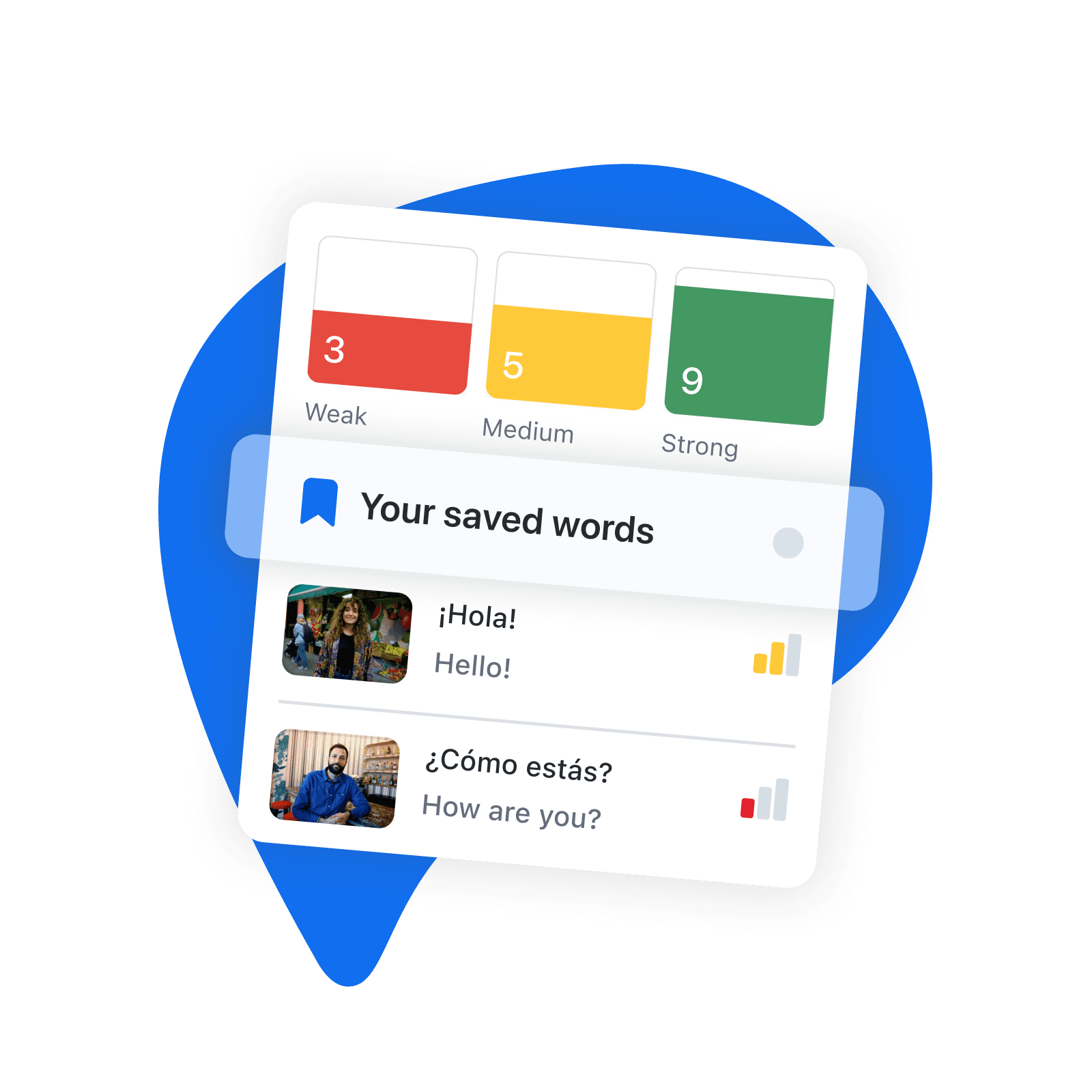
Busuu’s Vocabulary Review tool automatically tracks all the words you’ve learned in your course. It also uses a spaced repetition algorithm to help you remember them. It also tracks your performance on reviews. Words you’ve mastered are labeled Strong and appear less frequently. Words you struggle with are labeled Weak and appear more frequently. This way, you don’t waste time learning words you already know.
5. Make flashcards
Flashcards are a fantastic way to learn vocabulary. Don’t buy pre-made sets of flashcards. They might include words you already know or words that aren’t relevant to you. Make sets for the words you’ve studied either on paper or digitally.
Busuu’s Vocabulary Tool automatically tracks the words you’ve studied, so you don’t need to spend time making your own flashcards.
6. Study vocabulary every day
A little every day goes a long way. You can learn one or five words each day. Choose a pace you’re comfortable with. It might not sound like much, but it compounds — doing this daily will lead to an impressive Spanish vocabulary.
7. Write down the words you learn
People have made vocabulary journals for years and years because they’re effective. They’re not glamorous. But they work. Write down your new words, their parts of speech, meanings, pronunciation, and example sentences. Add words with similar or opposite meanings. And make sure you review it regularly.
8. Communicate
There’s no point learning all these new words and not using them. Use them in your conversions and written Spanish. Here are some ways you can use them:
Add new words to your conversations
Tell or write stories
Write social media posts
Write essays
Keep a journal
Writing is easier because you don’t need a partner. But, in an ideal world, do both writing and speaking practice to reinforce your new words.
9. Use an app
Flashcards and vocabulary journals are effective tools. But apps are a great tool, too. Busuu’s Vocabulary Trainer, for example, automatically saves all the words you’ve learned during your course. You can see them, review them, and take quizzes. The Strengthen Vocabulary feature shows you the words you struggle with so you can practice the words that need extra attention.
10. Enjoy the process
Last but not least, have fun. Mastering Spanish vocabulary will take a long time, and if it isn’t fun, it’s going to be much harder to keep turning up every day. So, think of ways to make your vocabulary learning fun. Listen and read about things you’re interested in. Find interesting people to talk with. Be creative when practicing writing.
Whatever it is, find ways to learn vocabulary that you enjoy.
Why Busuu is the best place to learn Spanish vocabulary
A thriving and supportive community
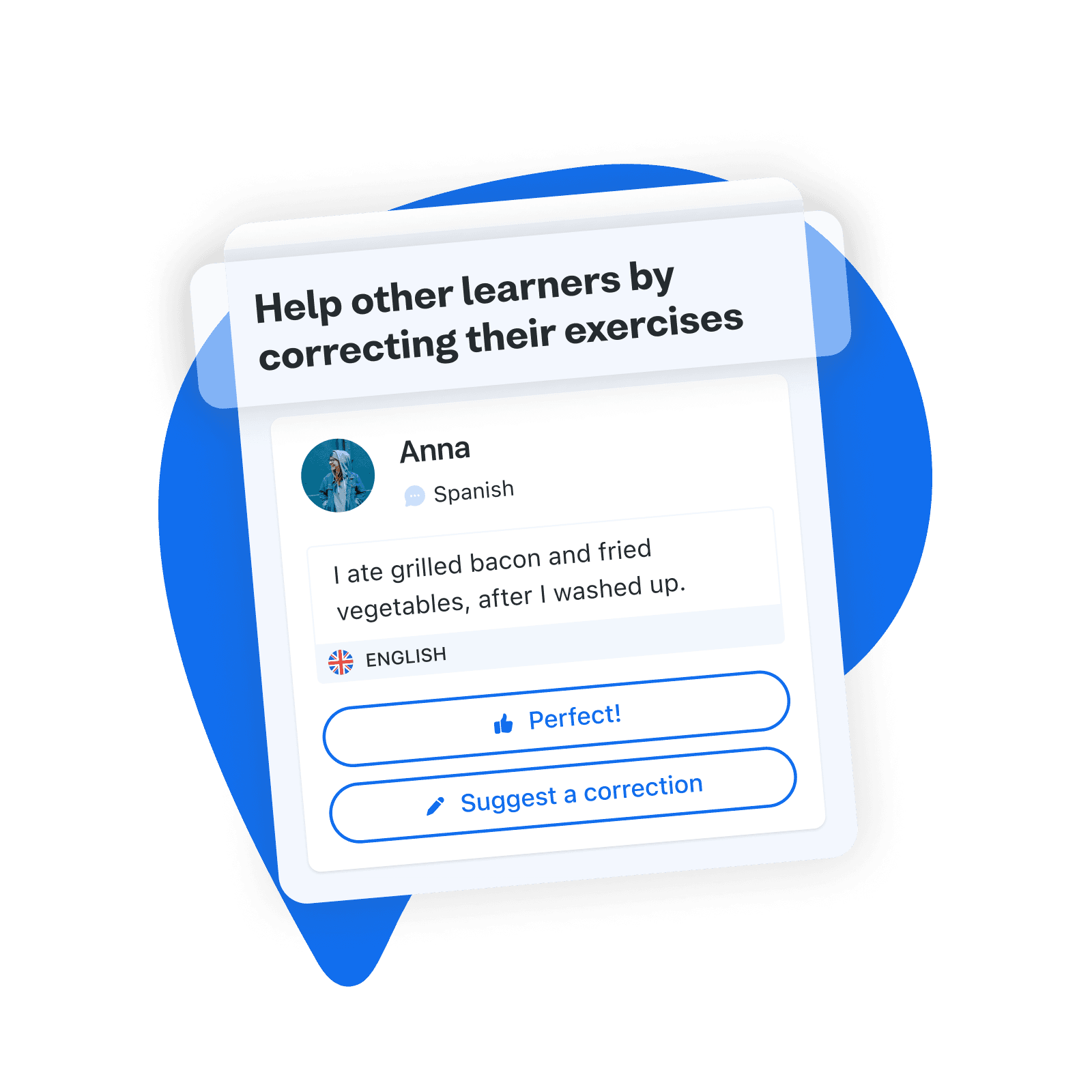
Getting feedback from native Spanish speakers is a huge help. Busuu’s online community has millions of language learners and native Spanish speakers helping and supporting each other. Share your Spanish and get feedback on your vocabulary, writing, and speaking skills.
An easy-to-stick-to, sustainable habit
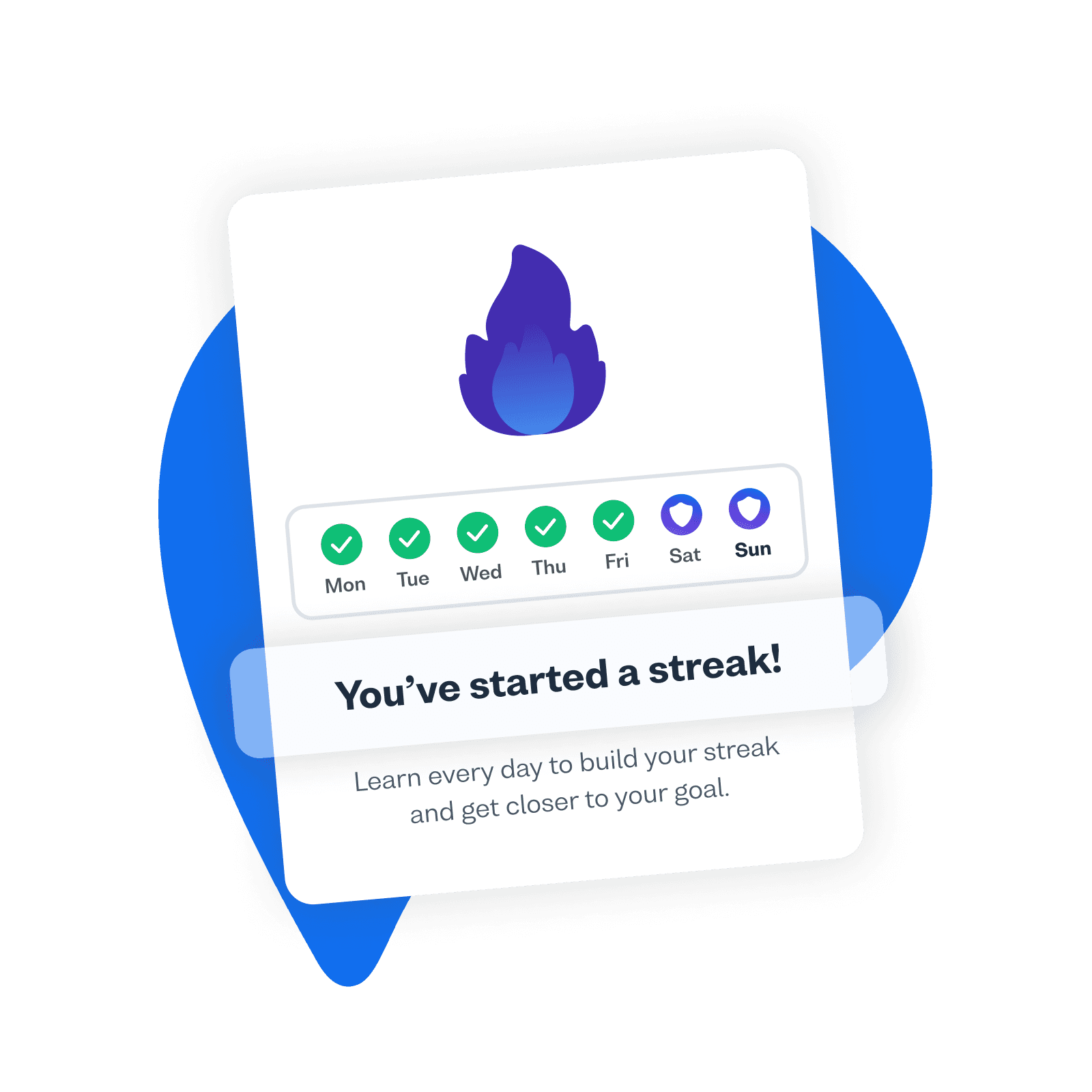
The biggest key to success when learning Spanish is consistency. An effective way to learn languages alone isn’t enough. Combine this with consistency, and magic happens. The thing is, being consistent when life is busy is tough. Luckily, Busuu has features that make it easy to fit Spanish learning into your life. With easy-to-follow, bite-sized lessons and videos and a convenient app, you can study Spanish wherever and whenever you like.
Advanced language learning tools
Busuu uses spaced-repetition algorithms to help you increase your Spanish vocabulary. It automatically tracks the words you’ve learned. And it knows which words you know well and which are still difficult. Busuu uses this data to give you personalized language learning. You review the words you need to review at the perfect time to avoid forgetting. Words you struggle with appear more frequently. So you don't waste time studying words you already know.
Learn Spanish vocabulary today with Busuu
Increasing your Spanish vocabulary improves your communication skills, gives you more confidence, and helps you achieve your goals—no matter what they are. Busuu has Spanish courses for general Spanish, test-prep Spanish, and travel Spanish. Not only does the app have authentic Spanish reading and listening courses to learn from, but it also has advanced language-learning features, like spaced repetition. Follow the advice in this article and master Spanish with Busuu.
AUTHOR
Barney Meekin
Newlanguages