I want to learn...
Author:
Alberto Araujo
Why learn to speak Spanish now
Spanish is one of the most useful languages an English speaker can learn. According to the Instituto Cervantes Anuario 2025, there are more than 630 million Spanish speakers worldwide, including 520 million native speakers.
That means real travel, career and cultural opportunities. You can expand your career into US, Latin America, and EU markets, and connect with the second-largest native-speaker community in the world.
With a few weeks of focused speaking practice, you can introduce yourself, ask for help, order food and handle simple conversations with more confidence.
Your quick-start toolkit: Resources and methods
Speaking-first learning works best when each tool has a clear job. Busuu’s Spanish courses
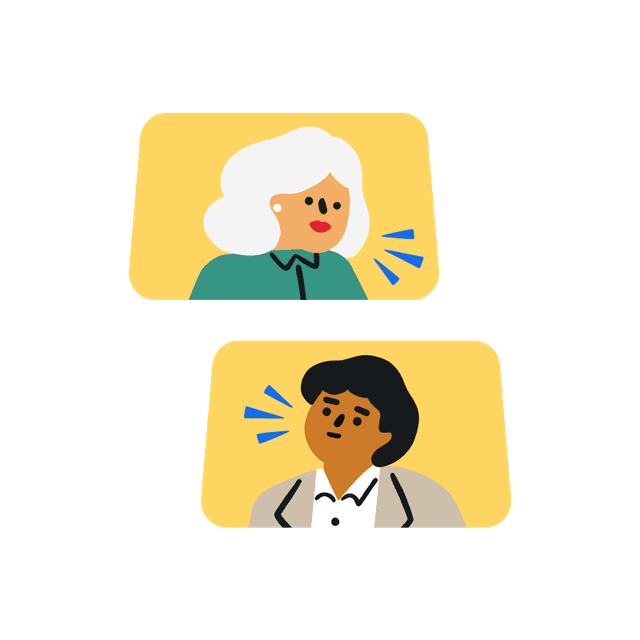
Video-based speaking lessons
Native Spanish speakers introduce words and expressions, allowing you to hear and repeat the natural rhythm, tone and pronunciation of the language.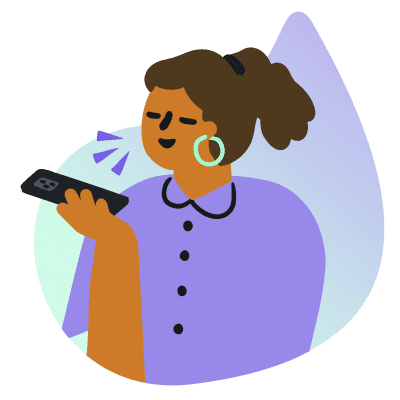
Busuu Conversations
Practice speaking anytime with AI-powered interactive conversations. You’ll get instant responses and personalized feedback to help you boost your speaking skills.
Personalized pronunciation feedback
As a core feature of Busuu lessons, you can record yourself speaking to try out what you’ve learned, and you’ll receive feedback and tips from Spanish speakers in the Busuu Community.A practical path to speaking Spanish: 6-week plan
This plan assumes 15-20 minutes of focused daily practice. The US Foreign Service Institute estimates that it takes 600 class hours to reach professional working proficiency in Spanish, so treat this guide as a practical way to get started.
Six-week plan beginning to learn Spanish
| Weeks | Focus | Daily micro-practice | Speaking goal |
|---|---|---|---|
| 1-2 | Pronunciation and survival phrases | Speaking practice Phrase drills | Greet others, introduce yourself and ask basic questions |
| 3-4 | Everyday scenarios and core verbs | Conversations Vocabulary review | Order food, ask directions and describe your day |
| 5-6 | Past events and dialogue | Conversations Self-recording | Hold a 5-minute unscripted chat |
Speaking skills first: Core concepts before grammar
Many students wait to speak because their grammar feels messy, unprofessional or basic. That’s exactly what’s holding you back. Speaking helps you learn grammar in context because every sentence has a purpose.
Instead of studying polite requests alone, practice one task, for example, asking for a table at a restaurant.
Here’s a sample script:
Customer: Hola, ¿tienen una mesa para dos?
(Hello, do you have a table for two?)
Server: Sí, claro. ¿Dentro o fuera?
(Yes, of course. Inside or outside?)
Customer: Fuera, por favor. Gracias.
(Outside, please. Thank you.)
In three lines, you practice greetings, questions, numbers, stating a preference, and courtesy.
Everyday Spanish phrases for beginners
Here’s a list of the basic phrases that you should know and practice to learn Spanish properly. Start with reusable chunks and you’ll see they reduce the pressure to translate every word in your head.
| Situation | Spanish phrase | English translation |
|---|---|---|
| Introductions | Me llamo (your name) | My name is… |
| Asking for help | ¿Puedes ayudarme? | Can you help me? |
| Asking for clarification | ¿Puedes repetirlo? | Can you repeat that? |
| Food or shopping | Quiero pedir (the thing) | I want to ask for… |
| Asking for directions | ¿Dónde está (the place) ? | Where is…? |
Practice makes progress: Spanish speaking drills that work
Use these Spanish speaking drills for 10 minutes a day. The point is to improve your language proficiency, not just do exercises.
Shadowing – Repeat a short Spanish clip half a beat behind the speaker. Focus on pronouncing vowels clearly and copying sentence stress.
Role-plays – Choose one real prompt, set a two-minute timer and use only Spanish.
Daily speaking rounds – Record one minute talking about your daily routine, family, or future plans. Repeat the next day and fix one problem.
Here’s a short dialogue as an example:
A: Perdón, ¿dónde está la estación?
(Excuse me, where is the station?)
B: Está a cinco minutos, todo recto.
(It’s five minutes away, straight ahead.)
A: Perfecto, muchas gracias.
(Perfect, thank you very much.)
A simple Spanish pronunciation guide
Spanish vowels are short and consistent: a, e, i, o, u. For consonants, the h is silent in hola and hotel. The ñ in mañana sounds like the middle of ‘onion’. The j in jamón, Jorge or trabajo is stronger than the English ‘h’ in many accents.
Here’s a simple pronunciation exercise. Say hola, mañana, trabajo, jamón and hotel slowly. Then say, “Hola, mañana trabajo en el hotel.” (Hi, I’m working at the hotel tomorrow.)
Record, listen and repeat.
Common mistakes to avoid when learning to speak Spanish
Translating in your head. Practice phrases like ¿cómo se dice...? (How do you say…?), quiero pedir… (I want to ask…) and ¿puedes repetirlo? (Can you repeat it?) Try to understand each sentence naturally in each situation.
Waiting for perfect grammar. Don’t wait to master every verb form before you start talking to people. You don’t have to be perfect, you just have to start and understand that mistakes help you learn.
Avoiding listening. Spanish listening and speaking grow together, so listen to Spanish at a natural speed early and often.
Measure progress and stay motivated
Track speaking minutes, not just lesson minutes. A seven-day average will show whether you are actually practicing speaking enough.
Each week, record yourself describing your week. Compare it with last month’s recording and ask yourself if you can speak longer, pause less and speak without translating in your head.
You can also set real-life milestones. Order that meal you want in Spanish, ask for directions to a place you always wanted to go, hold a three-minute call or watch one short video without subtitles.
AUTHOR
Alberto Araujo
Newlanguages