I want to learn...
Reflexive verbs in Italian are any verbs that have a reflexive pronoun. They indicate that an action is being performed on ourselves, like getting dressed, washing ourselves and so on. In English, this is similar to saying “of the self” or “myself”, “yourself”, etc.
While most verbs in Italian aren’t reflexive, many of the most common ones are or can be. Discover the top reflexive verbs you should know, plus an easy guide to conjugating them in the present and simple past tenses.
What are Italian reflexive verbs?
Every non-reflexive Italian verb in its infinitive (that is, its base form) ends with -are, -ere or -ire.
Take a look at the endings of the non-reflexive verbs below:
Lavare (to wash)
Sedere (to sit down)
Sentire (to feel, to touch)
Reflexive verbs, however, drop the-eat the end and instead end in-si. The meaning essentially corresponds to saying “oneself” in English.
Here are some examples:
Lavarsi (to wash oneself)
Sedersi (to sit oneself down)
Sentirsi (to feel oneself)
The verbs above reflect an action one does to oneself. Hence the name “reflexive” – they’re reflecting back onto you.
How to know when an Italian verb is reflexive
A basic way to think of these verbs is that a verb becomes reflexive when the subject and the object are the same.
For example, io lavo i piatti (I wash the dishes) is not reflexive because the subject (io) is not the same as the object (i piatti). But if one says io mi lavo (I wash myself), the subject (io) and the object (mi) are the same, so it is reflexive.
This also goes for when the object is indirectly connected to the subject. Take the sentence, mi pettino i capelli (I comb my hair). It’s reflexive because your hair is a part of yourself.
Pro Tip: Some verbs are reflexive only, while others are sometimes reflexive and others times not. Some verbs can never be turned into reflexive verbs. A quick cheat code to knowing whether a verb in Italian might be reflexive is if it uses “oneself” or “to get…” in English. Many English verbs using “to get…”, such as “to get dressed” or “to get married,” are reflexive in Italian.
Other reflexive verbs are actually reciprocal verbs, so they have a meaning closer to “each other” than “oneself.”
Below are some instances of this case:
Vedersi (to see each other)
Incontrarsi (to meet each other)
Amarsi (to love one another)
Innamorarsi (to fall in love)
Others yet are reflexive verbs in Italian even if they don’t describe an action we perform on ourselves or with another. These are called riflessivi indiretti, because they’re indirect but still use a reflexive pronoun.
For instance, accorgersi (to notice) or lamentarsi (to complain) are treated as reflexive, even if they have no object or the object isn’t the same as its subject. Unfortunately, the best solution is to just memorize these verbs.
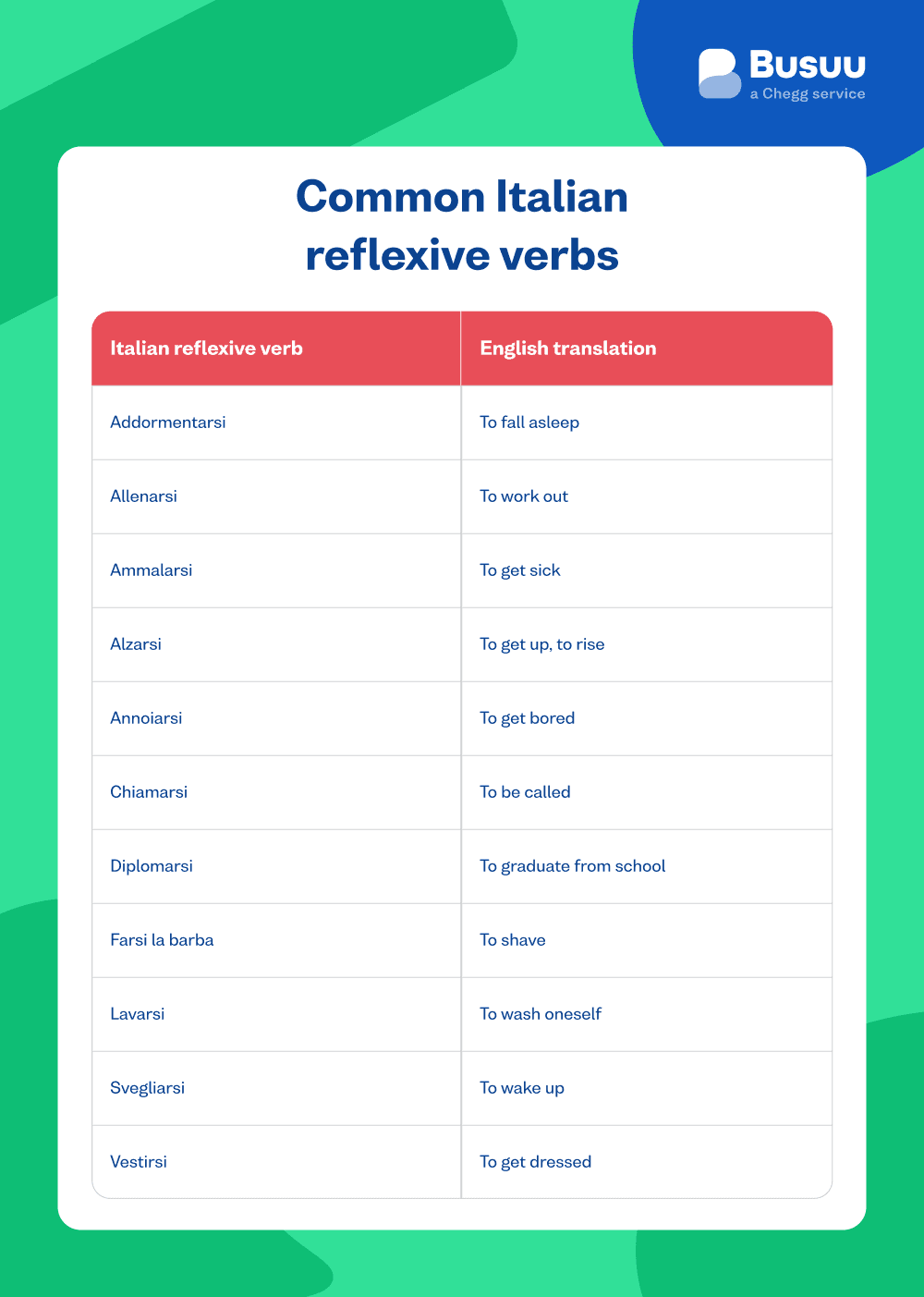
Let’s take a look below at the most common reflexive verbs in Italian.
25 common Italian reflexive verbs
Addormentarsi – to fall asleep
Allenarsi – to work out
Ammalarsi – to get sick
Alzarsi – to get up, to rise
Annoiarsi – to get bored
Chiamarsi – to be called
Diplomarsi – to graduate from school
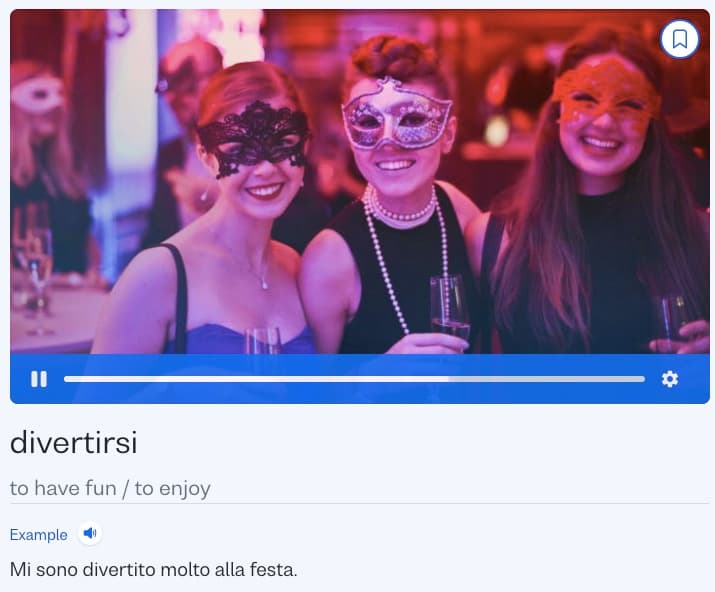
Divertirsi – to have fun, to enjoy oneself
Farsi la barba – to shave
Farsi la doccia – to take a shower
Innamorarsi – to fall in love
Innervosirsi – to get nervous
Lamentarsi – to complain
Laurearsi – to graduate from university
Lavarsi – to wash oneself
Pettinarsi – to comb one’s hair
Sedersi – to sit down
Sentirsi – to feel oneself
Spogliarsi – to get undressed
Stressarsi – to get stressed
Svegliarsi – to wake up
Truccarsi – to put on make-up
Ubriacarsi – to get drunk
Vestirsi – to get dressed
Voltarsi – to turn oneself around
Italian reflexive pronouns
Before we learn how to conjugate these reflexive verbs, we should learn about reflexive pronouns. For this section, we recommend reviewing Busuu’s guide to Italian pronouns first.
Each subject pronoun (io, tu, lui/lei, noi, voi and loro) has a corresponding reflexive pronoun. We insert the reflexive pronoun between the subject pronoun and the verb.
Take a look at the chart below for every subject pronoun, its reflexive form, plus the conjugated form of divertirsi (to have fun).
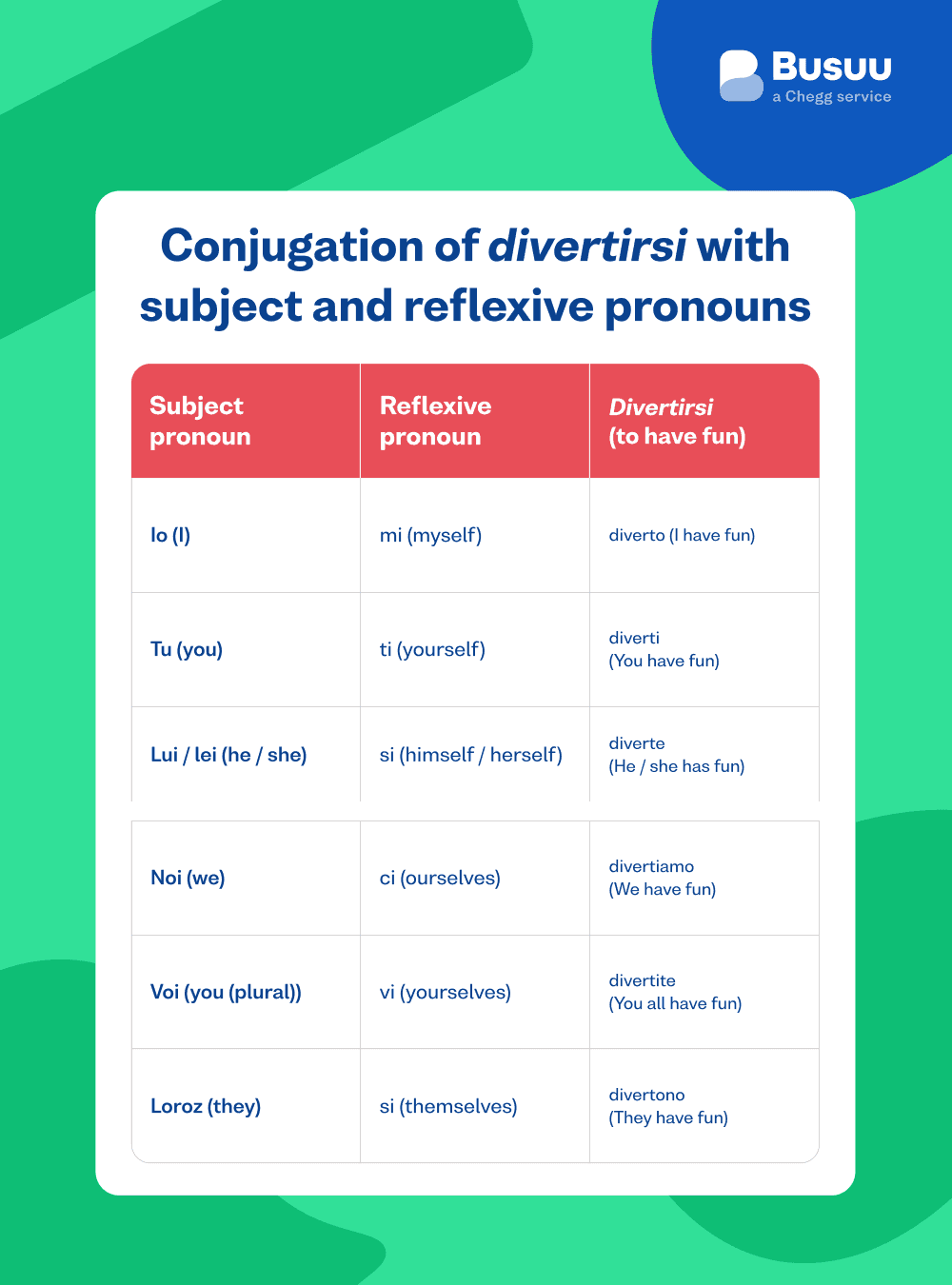
Conjugation of “divertirsi” with subject and reflexive pronouns
| Subject pronoun | Reflexive pronoun | Divertirsi (to have fun) |
|---|---|---|
| Io (I) | mi (myself) | diverto (I have fun) |
| Tu (you) | ti (yourself) | diverti (You have fun) |
| Lui / lei (he / she) | si (himself / herself) | diverte (He / she has fun) |
| Noi (we) | ci (ourselves) | divertiamo (We have fun) |
| Voi (you (plural)) | vi (yourselves) | divertite (You all have fun) |
| Loro (they) | si (themselves) | divertono (They have fun) |
Now that we know our reflexive pronouns, let’s put it all together.
How to conjugate reflexive verbs
Conjugating reflexive verbs in Italian is easy, once you know the pattern. Here’s what to do:
1. Take any reflexive verb in its infinitive form.
Chiamarsi (to call)
2. Drop the -si at the end.
Chiamar-
3. Add an “
Chiamare
4. Conjugate the verb as normal.
Io chiamo
Tu chiami
Lui/lei chiama
Noi chiamiamo
Voi chiamate
Loro chiamano
See our guide to conjugating Italian verbs if you’re unsure how to do this.
5. Move the -si (the reflexive pronoun) to before the verb.
It will go after the personal pronoun (io, tu, etc.) Change it to the correct reflexive pronoun if it isn’tsi (such as mi, vi, ci, etc.)
The formula is: subject pronoun + reflexive pronoun + conjugated verb:
Io mi chiamo
Tu ti chiami
Lui/lei si chiama
Noi ci chiamiamo
Voi vi chiamate
Loro si chiamano
See how this differs from the regular present tense below, using vestire(to put clothes on someone) versus vestirsi (to put clothes on oneself/to get dressed). Both verbs will take the regular-ire conjugation.
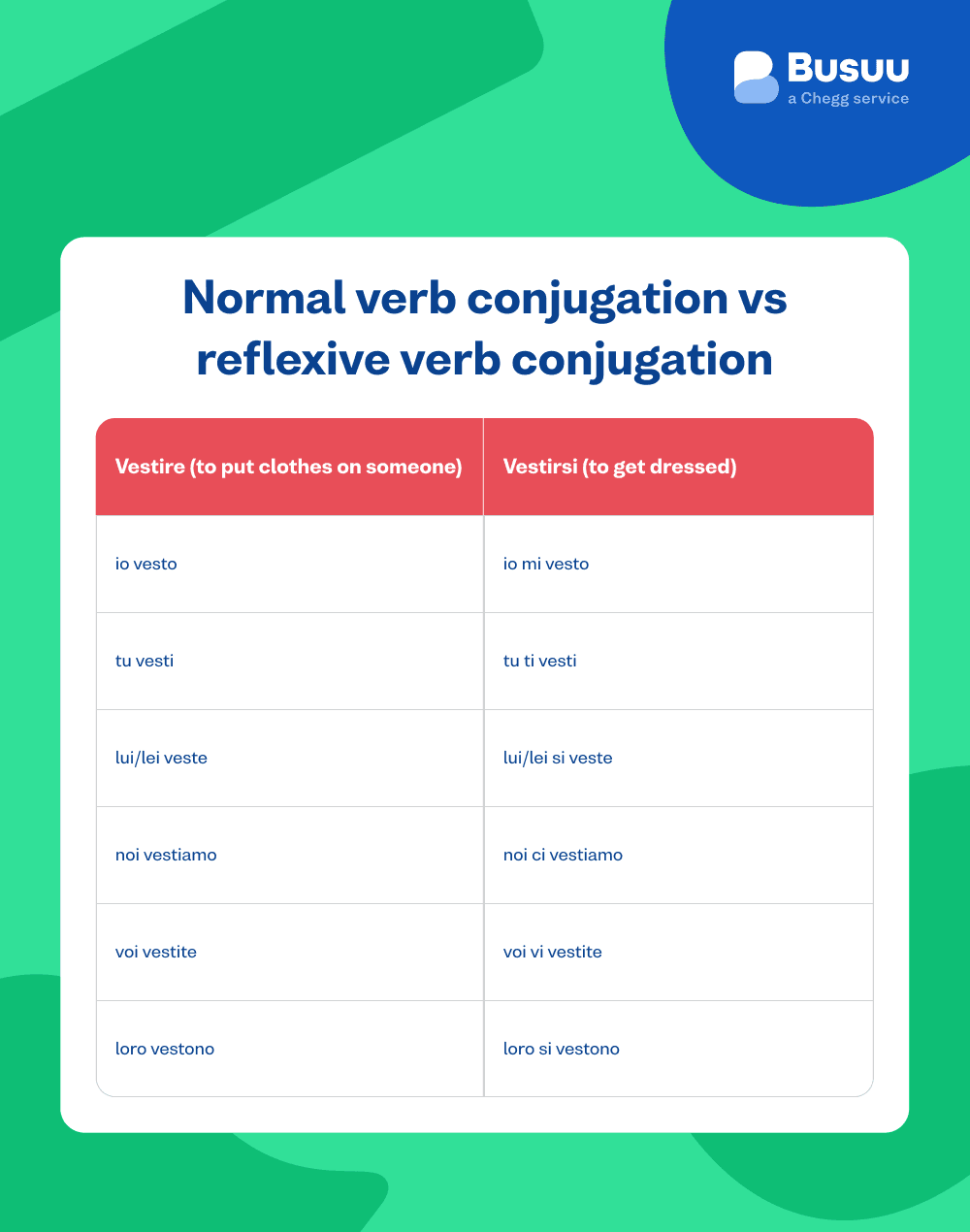
Normal verb conjugation versus reflexive verb conjugation
| Vestire (to put clothes on someone) | Vestirsi (to get dressed) |
|---|---|
| io vesto | io mi vesto |
| tu vesti | tu ti vesti |
| lui/lei veste | lui/lei si veste |
| noi vestiamo | noi ci vestiamo |
| voi vestite | voi vi vestite |
| loro vestono | loro si vestono |
As you can see, the endings are the same for both non-reflexive and reflexive verbs in Italian – the only difference is whether there’s a reflexive pronoun before the verb.
Remember: If you’re using a reflexive verb to describe an action with a part of your body, like “mi lavo i denti” (I brush my teeth) or “mi faccio la barba” (I shave), you won’t include the
How to build negative sentences with reflexive verbs in Italian
To make a negative sentence with a reflexive verb, add non before the reflexive pronoun:
(Io) non mi lamento. (I don’t complain.)
(Noi) non ci laviamo. (We don’t wash ourselves.)
(Lui) non si chiama Alberto. (His name is not Alberto/He is not called Alberto.)
Adding Italian reflexive pronouns to the end of a verb
Sometimes reflexive pronouns (mi, ti, si, ci, vi) can attach to the end of a verb, rather than go in between the subject pronoun and the verb.
If a verb is in its infinitive form, then you can add the reflexive pronoun to the end. This is commonly the case when there’s a modal verb like volere (to want) or dovere (to have to/to must) or verbs followed by a preposition, like finire di (finished with) or continuare a (continue to).
Here are some examples of this rule in action:
Laurearsi (to graduate)
Voglio laurearmi. (I want to graduate.)
Alzarsi (to get up)
Deve alzarsi. (He/she must get up.)
Divertirsi (to have fun)
Continuiamo a divertirci. (We continue to have fun.)
Conjugating reflexive verbs in the past tense
We’ve seen how to conjugate reflexive verbs in the present tense, but let’s take a look at how this works in the present perfect/past simple (passato prossimo). If you haven’t studied passato prossimo yet, we recommend brushing up on that before reading this section.
First, our formula doesn’t change. It’s still subject pronoun + reflexive pronoun + verb.
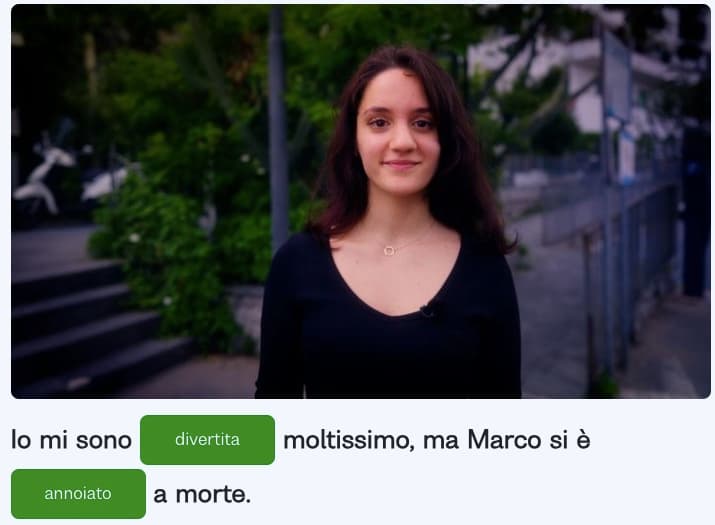
The only change is that you will conjugate the verb into passato prossimo. Reflexive verbs always take essere (to be) as the auxiliary.
Remember, in passato prossimo, when essere is the auxiliary, the verb will reflect the gender (masculine or feminine) and the number (singular or plural) of the subject. See a breakdown of this in the chart below using svegliarsi (to wake up).
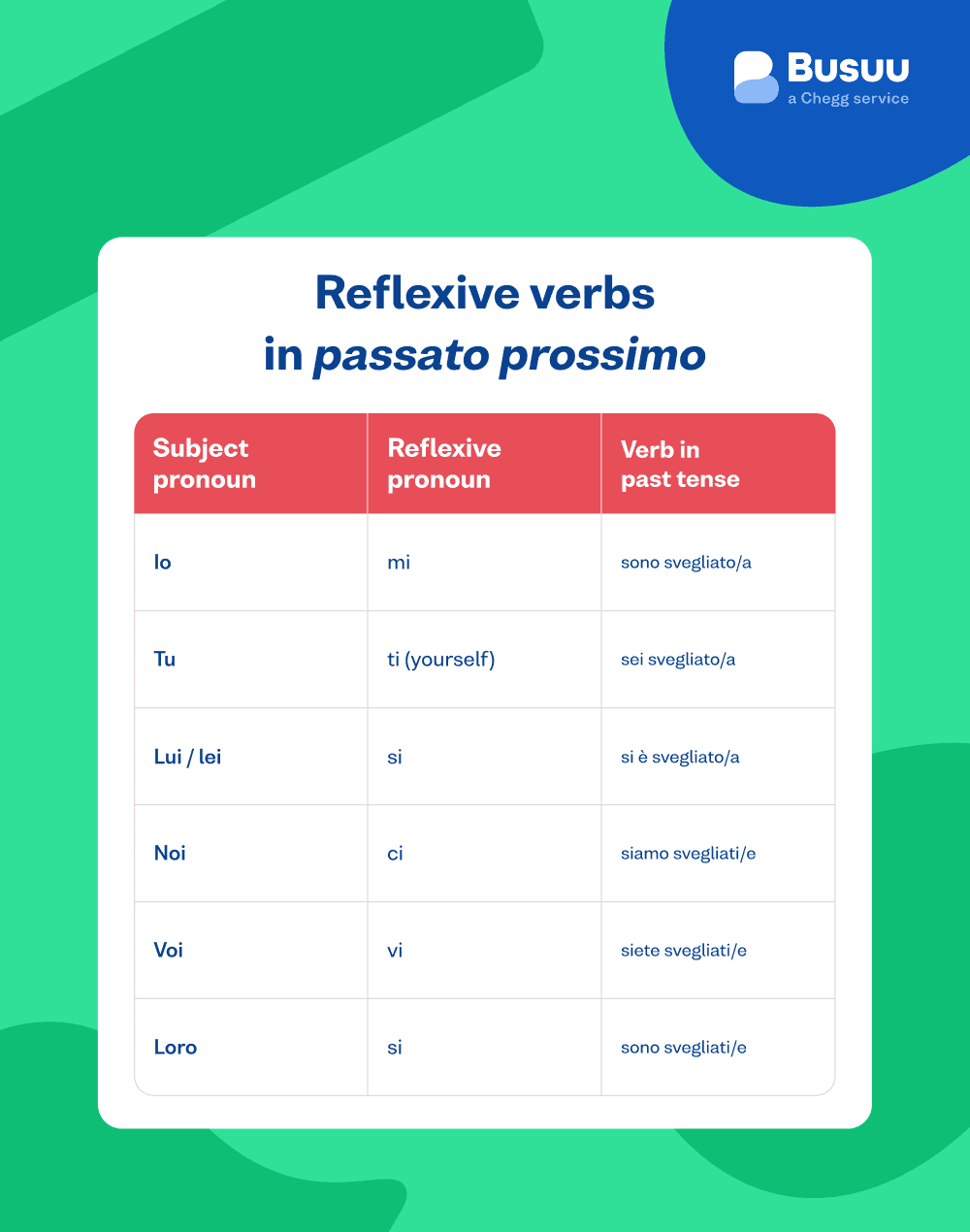
Reflexive verbs in passato prossimo
| Subject pronoun | Reflexive pronoun | Verb in past tense |
|---|---|---|
| Io | mi | sono svegliato/a |
| Tu | ti | sei svegliato/a |
| Lui/lei | si | è svegliato/a |
| Noi | ci | siamo svegliati/e |
| Voi | vi | siete svegliati/e |
| Loro | si | sono svegliati/e |
See the examples below for it all put together:
(Io) mi sono svegliato. (I woke up – masculine version.)
(Noi) ci siamo svegliati. (We woke up – masculine version.)
(Loro) si sono svegliate. (They woke up – feminine version.)
(Voi) vi siete svegliate. (You all woke up – feminine version.)
And that’s it! Reflexive verbs are very useful for describing everyday actions, so if you study the pattern, you’ll have a whole host of new verbs at your disposal.
With practice, you’ll intuitively know when a verb is reflexive and how to conjugate it. With Busuu, you can study and learn with other Italian speakers in our online community. And if you want to learn Italian fast, check out our 7 top tips.
Newlanguages